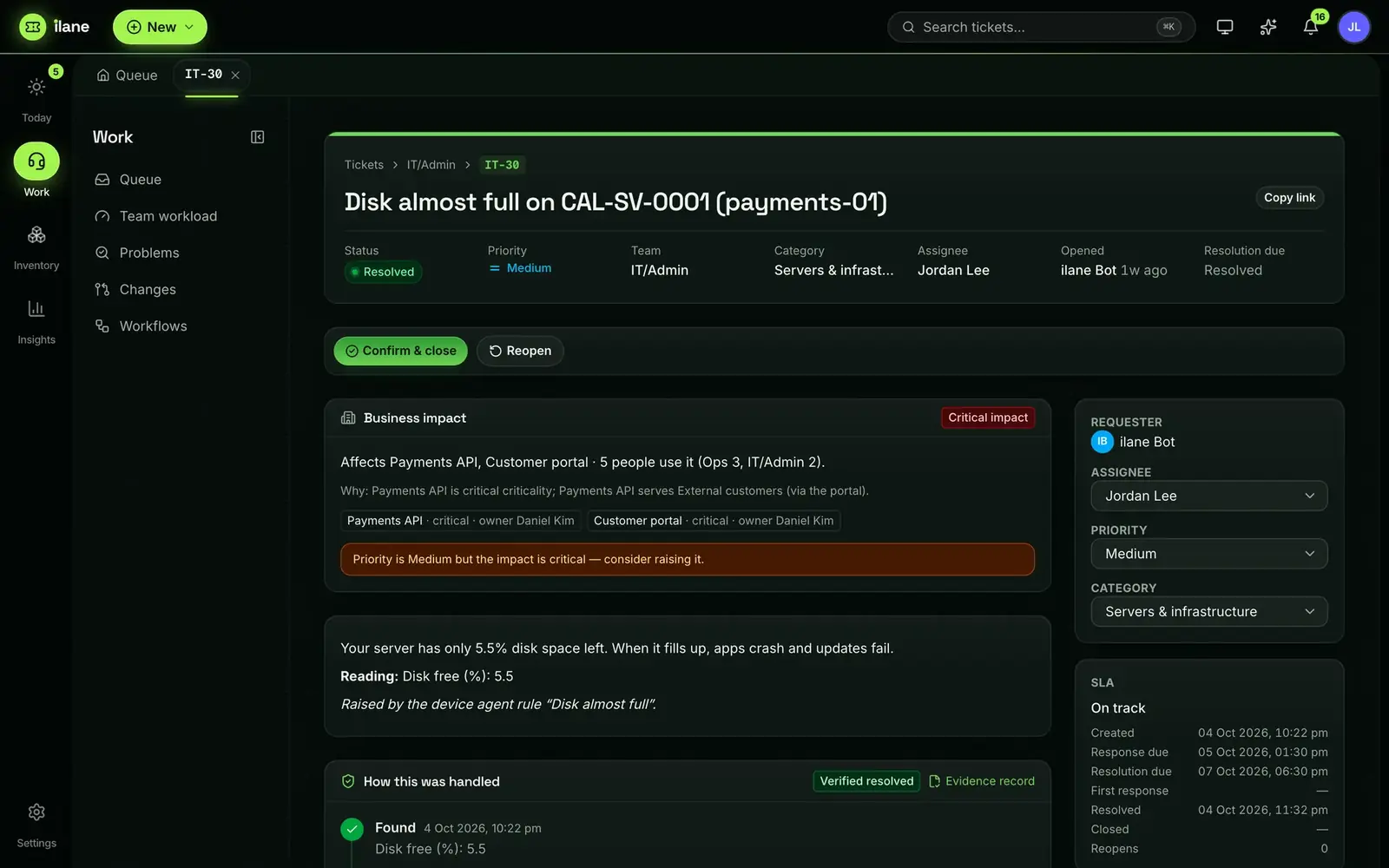
01 · Found
A check sees it first.
The ilane agent and the cloud and code-repository connections check things all day. When a rule trips — a full disk, a crashed container, a laptop with its firewall off, a leaked secret — ilane opens the ticket itself.
- Laptop and server agent rules
- Cloud posture, health, expiry and cost
- Code repos: 2FA gaps, secrets, branch protection
- Warranties, renewals and low stock
02 · Grouped & owned
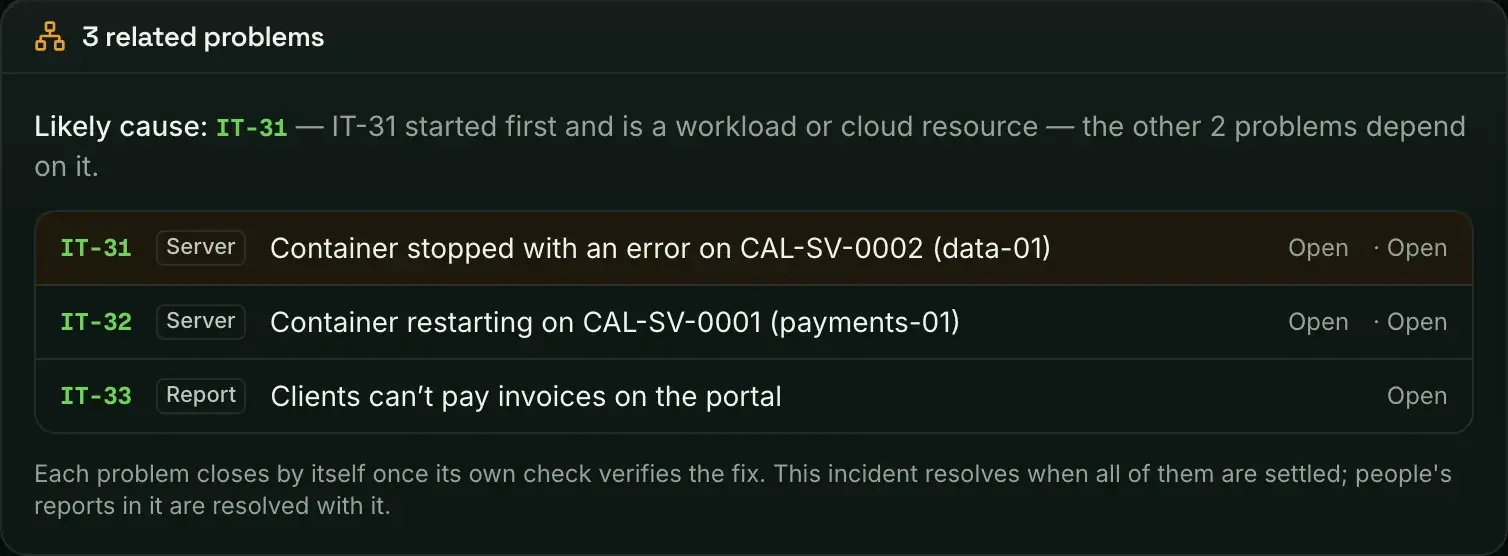
Three alerts become one incident.
Problems that touch the same service are grouped. The one that started lowest and earliest is called out as the likely cause, business impact is worked out from the service map, and the whole thing lands with one owner.
- Rule-based — no AI needed
- Impact from service criticality and who uses it
- Nudges you when priority looks too low
03 · Fixed
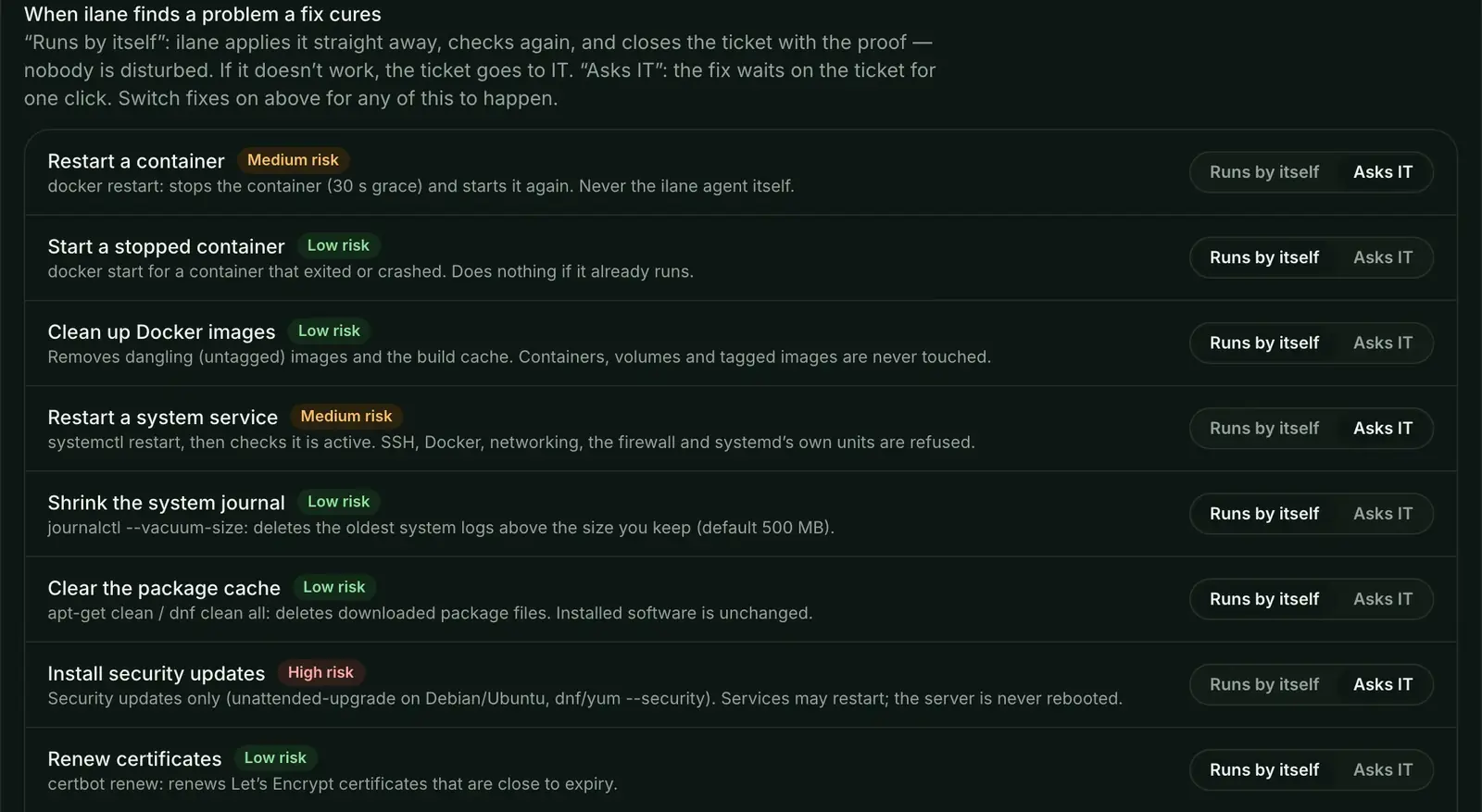
Safe runs. Risky asks.
For many server problems ilane has a built-in fix. Low-risk ones can run by themselves; anything riskier waits on the ticket for one click from IT. You decide which is which, fix by fix.
- Built-in fixes only — never a shell
- Each server allows only the fixes you list
- Every step the fix took is recorded
04 · Checked
ilane looks again — itself.
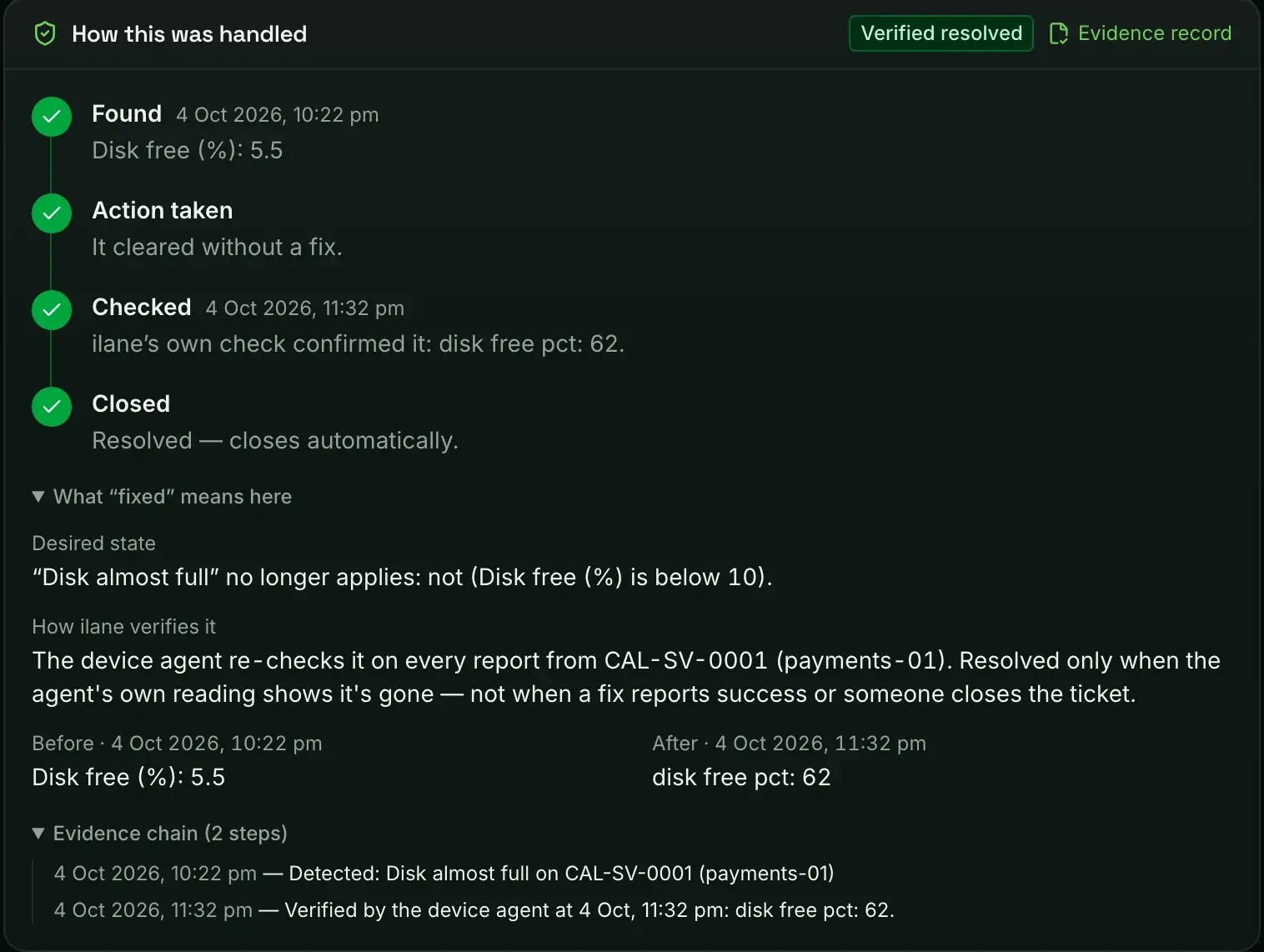
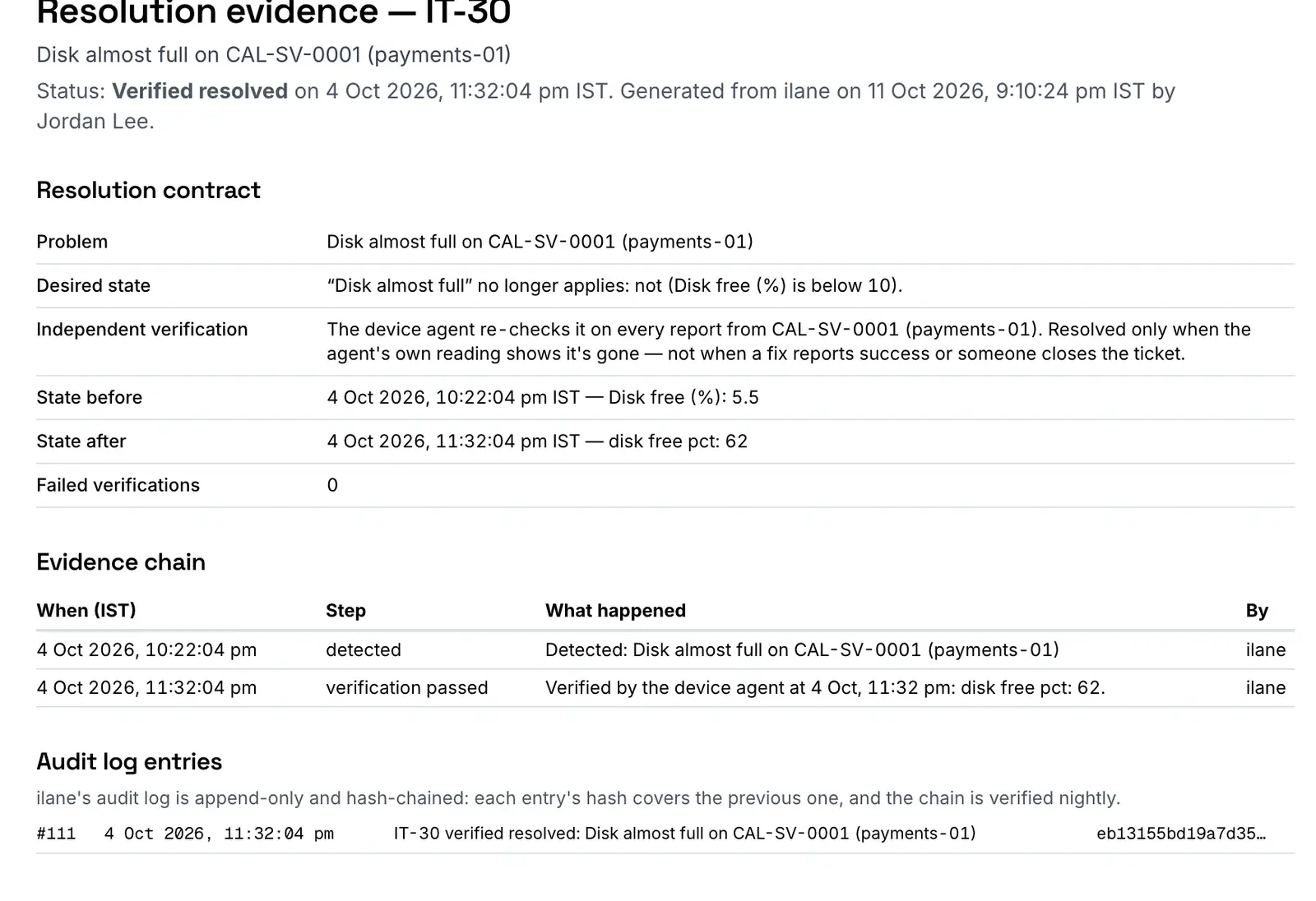
Every ticket from a check carries a contract: what “fixed” means, and how ilane will verify it. A fix reporting success doesn’t count. A person clicking resolve doesn’t count. Only ilane’s own next reading does.
- Desired state, written down up front
- Before and after readings saved
- Fails? The same ticket reopens
05 · Proven
Closed, with receipts.
The ticket closes itself and leaves an evidence record you can print or hand to an auditor: the contract, the before and after, every step, and the matching entries from a tamper-evident audit log.
- Printable evidence record per ticket
- Hash-chained audit log, verified nightly
- Counts on Impact and in your SOC 2 evidence