Per-device pricing for IT management software has no single fair market rate. What makes a price fair is what it covers. A good per-device price includes every device you run: laptops, desktops and servers. It should also cover the service desk, device checks, asset tracking, remote help and compliance evidence, without extra modules. Compare quotes by their full yearly cost per device, including add-ons, AI usage and hosting.
Updated
That’s the short answer. The rest of this guide covers how vendors price, what counts as a device, where the extra charges usually hide and how to compare quotes line by line.
How is IT management software usually priced: per agent, per user or per device?
Vendors charge in one of three ways: per agent (each IT person who works tickets), per user (each employee) or per device (each managed machine). Many IT suites mix all three.
- Per agent (per technician). This is common for help desks. It looks cheap when the IT team is small. But it says nothing about devices, and endpoint management is often a separate product with its own per-device price.
- Per user (per employee). This is simple to predict when every employee has one laptop. It drifts when people have two machines, or when you run servers that no one “uses”.
- Per device (per endpoint). The bill follows what you actually manage. It suits companies where the IT team stays small while the number of devices grows.
Which model is cheapest depends on how many IT staff you have compared with how many devices. Say a 300-person company has three IT staff. Per-agent pricing will look very cheap on the help desk line, and then the extra modules arrive. ilane prices per device. The ilane FAQ says the quote is based on how many laptops, desktops and servers run the ilane agent.
What counts as a device, and why does it matter for your bill?
A billable device is whatever the vendor’s contract says it is. Get that definition in writing, because it decides how fast your bill grows.
Ask each vendor whether these count, and at what price:
- Laptops and desktops. These are almost always billable. Check whether Mac, Windows and Linux are priced the same.
- Servers. Some vendors charge more for servers than for laptops. Others count servers separately.
- Containers and Kubernetes nodes. Are you billed per host, per node or per container?
- Peripherals. Monitors, docks and phones sometimes appear in asset registers. Find out whether they’re tracked for free or count towards the bill.
- Cloud accounts and code repositories. Are these read-only connections included, or a separate “cloud security” product?
- Leavers’ and spare devices. Does a laptop sitting in a drawer still count?
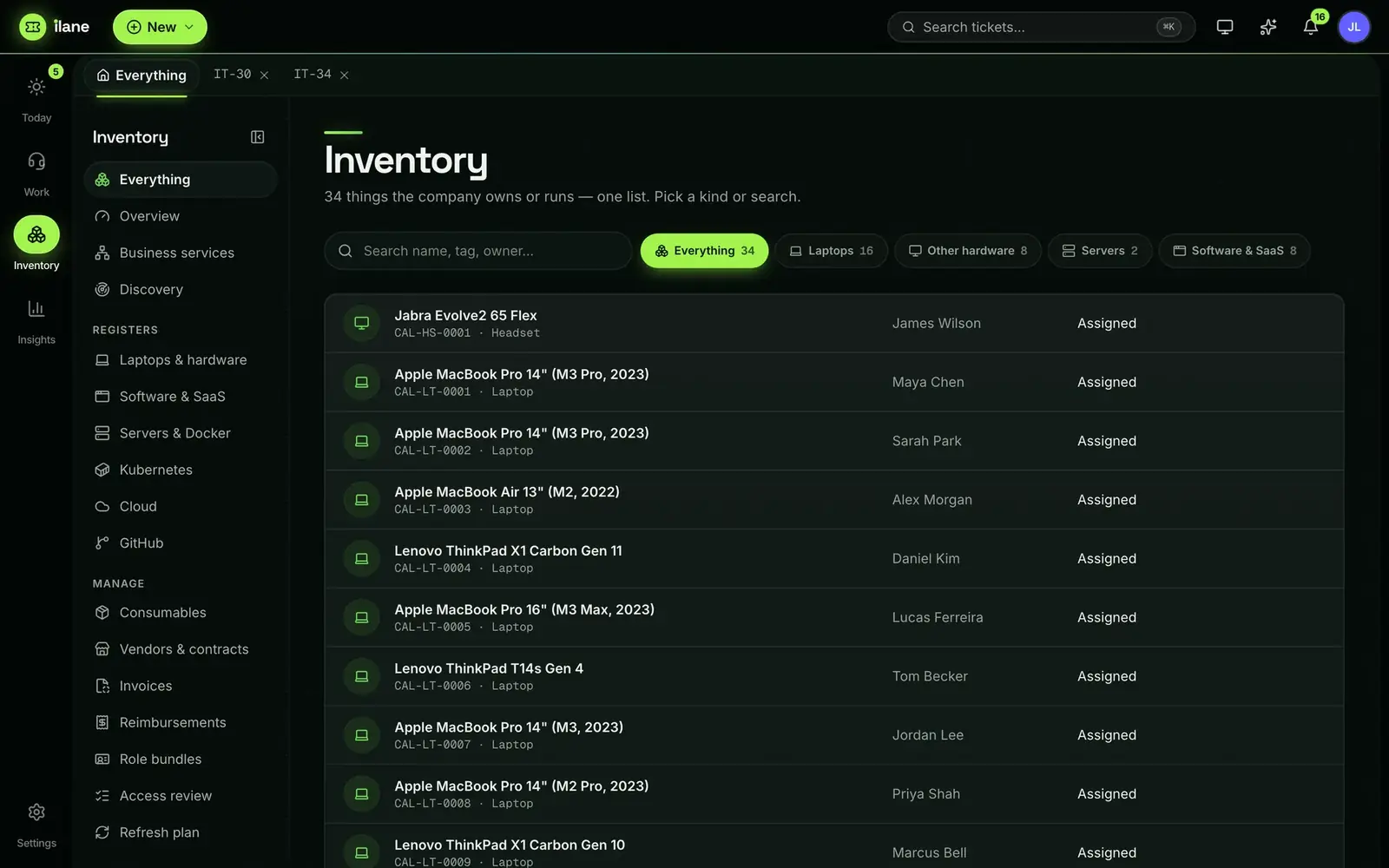
ilane quotes on devices that run its agent: Mac, Windows and Linux laptops, plus Linux servers running the agent as a system service or a Docker container. The agent finds connected monitors automatically and adds them to the register as assets. Cloud accounts, Kubernetes and code repositories connect read-only. Before you count anything, export your real device list. A register that updates itself, like ilane Assets & licences, gives you a number you can trust more than a spreadsheet.
Which features are often sold as separate modules or add-ons?
In a typical IT suite, everything beyond basic ticketing is a candidate for a separate charge. That includes the device agent, asset tracking, problem and change management, AI and compliance evidence.
Expect these lines to show up on a quote:
| Capability | How suites often sell it | What to ask |
|---|---|---|
| Service desk, SLAs, approvals | Per agent | Do HR, Finance and Ops agents cost extra? |
| Problems, changes, service map | Top tier only | Which tier do I need for these? |
| Hardware and software register | Add-on or separate product | Does it share data with tickets? |
| Device agent, posture checks, patching | Separate endpoint product | Is it priced per device or per agent? |
| Remote support | Separate tool | Is it included, and are sessions logged on the ticket? |
| Cloud and code-repo findings | Not in the service desk | Do findings become tickets? |
| AI assistant and triage | Paid add-on | Is there a fee per agent, plus usage? |
| SOC 2 / ISO evidence | Separate compliance (GRC) product | Is evidence taken from live data? |
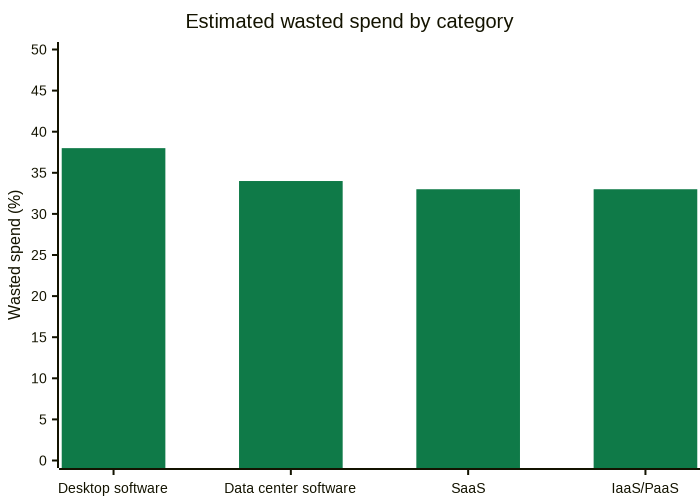
Overlapping tools cost money even when nobody uses them. In Flexera’s 2022 State of ITAM Report, companies estimated that 38% of their desktop software spend and 33% of their SaaS spend was wasted. More recently, Zylo reports that 46% of licences go unused in a 30-day period.
ilane’s comparison page lists every row of the table above as included in one product built on one database. That covers the service desk, asset register, device agent, cloud and code findings, the AI tools inventory, the AI assistant (using your own AI key) and SOC 2 / ISO evidence.
How do you calculate total cost for laptops plus servers?
Add up every line that grows with devices, every line that grows with IT staff, and every fixed fee. Then divide by your device count to get a true yearly cost per device.
Here’s a worked example with no prices filled in. Use the numbers from your own quotes.
Your company: 140 laptops, 8 desktops, 12 Linux servers, and 4 IT staff working tickets.
- Per-device quote (all features included): (140 + 8 + 12) × per-device rate × 12 months = yearly cost.
- Mixed suite quote: (4 × help desk agent rate) + (160 × endpoint rate) + asset add-on + AI add-on × 4 agents + compliance tool fee + remote support tool = yearly cost.
Now add growth. If you hire 50 people next year, a per-device quote grows by 50 laptops. A mixed suite grows by 50 endpoint licences, and maybe a fifth agent seat and a higher tier as well. Run both quotes at today’s size and at your expected size in 12 and 24 months.
What hidden costs come with AI features and self-hosting?
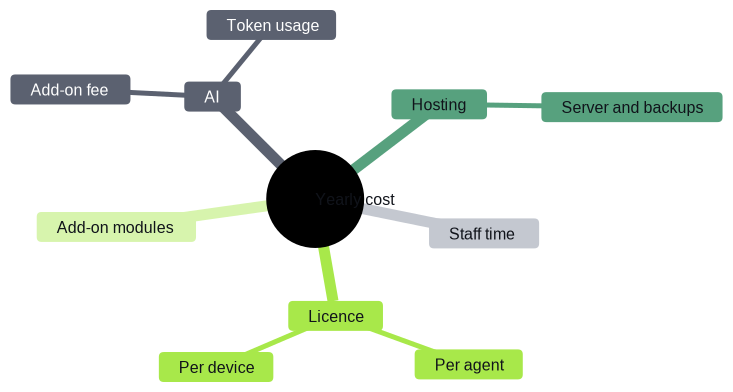
AI can add two costs: a fee for the feature and a usage bill from the AI provider. Self-hosting swaps a hosting fee for your own server, backups and staff time.
AI. Gartner says GenAI features are now standard in the software companies already own. That makes it worth asking how each vendor charges for them. Ask:
- Is AI a per-agent add-on, a higher tier, or included?
- Whose model runs it, and who pays for usage? AI APIs are usually billed per million tokens, so heavy use means a bigger bill.
- Can you switch AI off and still have automations run?
ilane includes its AI assistant and triage. Those features use your own OpenAI or Anthropic key, so any usage cost appears on your provider’s bill, where you can see it. AI can also be switched off. Rules decide what runs, and they work without AI.
Self-hosting. Running the software on your own server can help with data residency, but it isn’t free. Budget for the server, backups, monitoring, upgrades and the hours someone spends on them. ilane runs self-hosted with Docker Compose, or as a dedicated hosted instance that the ilane team runs for you. Its agents and connectors connect out over HTTPS, so you don’t open any firewall ports.
How do you compare vendor quotes line by line?
Put every quote into one format: the same device count, the same modules and the same time period. Then compare the yearly cost per device and what each price includes.
- List what you pay for today. Help desk, asset tracker, endpoint console, patching, remote support, uptime monitoring, cloud and code-repo security, licence tracking and a compliance tool. Each one that a new quote replaces counts as a saving.
- Match modules to needs. Mark each line “needed now”, “needed in 12 months” or “not needed”.
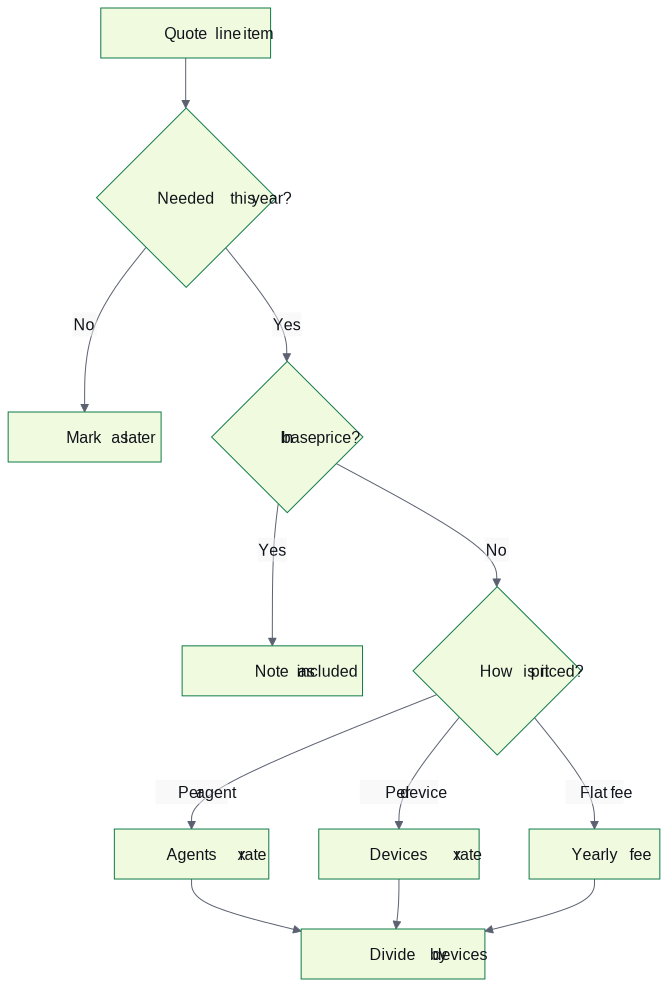
- Convert every price to the same unit. Turn per-agent, per-user and flat fees into a yearly cost per device.
- Write down the limits. Tier gates, minimum seat counts, contract length, price rises at renewal, and whether any devices are excluded.
- Check the results, not just the features. Find out how a ticket closes. Does it close when someone clicks, or when a check confirms the fix?
The last check matters because a low price per device doesn’t help if tickets close before the problem is fixed. ilane closes a ticket only when its own check confirms the fix. If the check fails, the ticket reopens.
Should you start with a pilot before committing?
Yes. A pilot on one team’s real laptops and servers tests the device count, setup effort and add-on needs before you sign a full contract.
Keep it small and measurable:
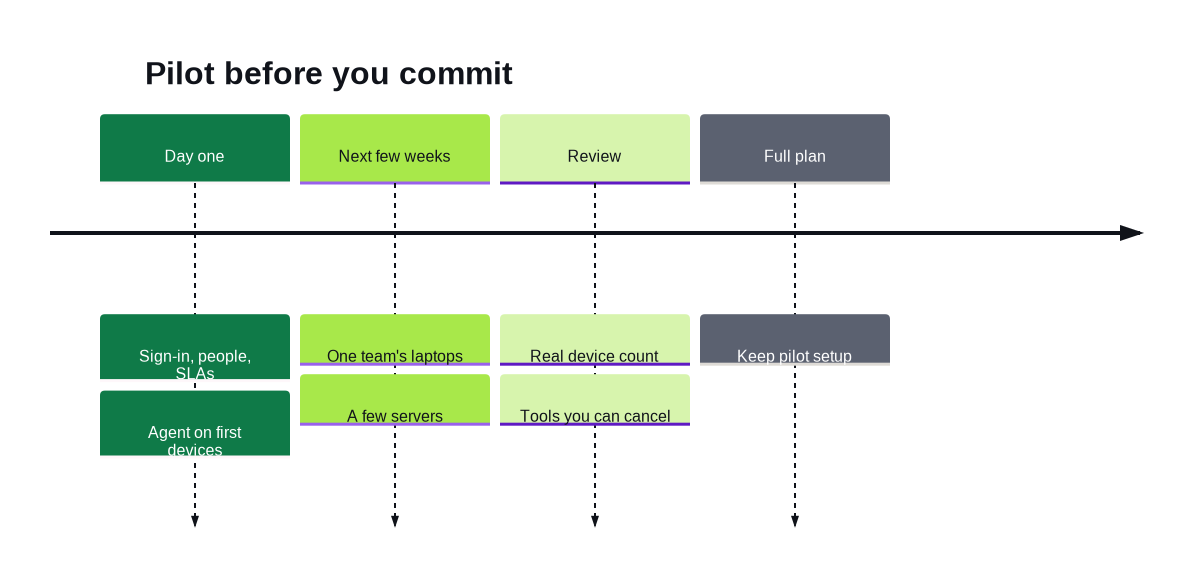
- Day one: sign-in, people, SLAs and the agent on the first devices. The ilane setup guide says most teams finish these essentials in an afternoon.
- Next few weeks: one team’s laptops and a few servers. Track the problems found, the fixes confirmed and any tools you could cancel.
- Review: compare your real device count with the quote, and check whether you needed anything outside the base price.
ilane supports pilots on one team. Everything you set up stays when you move to a full plan.
Conclusion
A fair per-device price covers every machine you run and every module you need, with no surprise tiers. Count your real devices, turn every quote into a yearly cost per device, and add AI usage and hosting before you compare. Then test the winner on one team.
If you’d like help with the comparison, bring your current quote to a demo. We’ll go through it line by line, and if the suite wins, we’ll say so. Book a demo →
Frequently asked questions
Do monitors and docks count as billable devices?
That depends on the vendor, so get their definition in writing. ilane bases its quote on the laptops, desktops and servers that run its agent. Monitors that the agent finds are added to the register as assets.
Is per-device pricing cheaper than per-agent pricing?
It depends on how many IT staff you have compared with how many devices. Per-agent pricing looks cheaper when the IT team is small, but endpoint, asset and compliance modules are often priced separately on top. Convert both quotes to a yearly cost per device at your current size and your expected size before deciding.
How much does ilane cost per device?
ilane quotes for each team, based on how many laptops, desktops and servers run the ilane agent. The comparison page lists the service desk, asset register, device agent, cloud and code findings, AI inventory and compliance evidence as included. Book a demo to get a quote for your device count.
Does self-hosting make IT management software cheaper?
Not always. You stop paying for hosting, but you now pay for a server, backups, upgrades and the staff time to look after them. ilane runs either self-hosted with Docker Compose or as a dedicated hosted instance, so you can compare both options.
Will AI features add usage costs to my bill?
If the AI calls a provider’s API, someone pays for the tokens it uses. Ask whether the vendor bundles that cost in or passes it on to you. ilane’s AI features use your own OpenAI or Anthropic key, so usage appears on your provider’s bill. You can also switch AI off completely.